
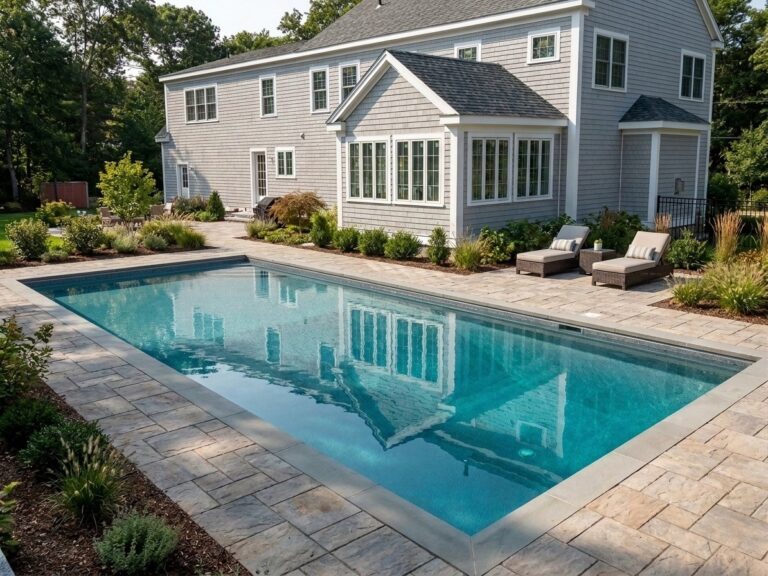
Cape Cod winters can be brutal. Freezing temperatures, heavy snow, and the occasional nor’easter put real stress on anything left exposed — including your swimming pool. Proper winterization protects your pool’s plumbing, equipment, and surfaces from freeze damage, and it sets you up for a faster, easier opening in the spring. Cut corners in the fall, and you may spend your first warm weekend of the year diagnosing cracked pipes or struggling with green water.
Balance the Chemistry First
Before you close your pool, it’s essential to balance the water chemistry. Imbalanced water sitting under a cover for five or six months can stain pool surfaces, corrode equipment, and make your opening much more difficult.
In the week leading up to closing, test and adjust pH to the 7.2–7.6 range, total alkalinity to 80–120 ppm, and calcium hardness to 200–400 ppm. Add a winterizing algaecide to prevent algae from taking hold over the cold months. Shock the pool two or three days before closing — not the night before — to allow the chlorine level to come down to a reasonable range before you put the cover on.
Lower the Water Level
For most pools with a mesh or solid safety cover, you’ll need to lower the water level below the skimmer opening — typically 12 to 18 inches below the coping. This prevents water from sitting in the skimmer over winter, where it can freeze and crack the skimmer body or the plumbing connected to it.
If you have a pool with a tile line, lower the water enough to protect the tile from freeze-thaw cycles, which can cause tile to pop and grout to crack. Your pool professional can advise on the right level for your specific pool design and cover type.
Blow Out the Lines and Add Antifreeze
This is the step that most homeowners leave to the professionals — and for good reason. Blowing out the plumbing lines with a commercial air compressor removes all standing water from the suction and return lines, the pump, filter, heater, and any water features. Any water left in the plumbing can expand as it freezes and crack pipes or fittings.
After blowing out the lines, pool-grade antifreeze is added to the skimmer and any lines that cannot be fully evacuated. Return line fittings are plugged with winter plugs, and the skimmer is fitted with an Aquador or a foam block to prevent ice pressure damage.
Secure the Cover Properly
A high-quality safety cover that’s properly installed is your best defense against winter debris, animals, and accidental falls. Make sure the cover is secured tightly at every anchor point and that there’s no sagging in the center that would allow water to pool on top of it. Standing water on a cover adds significant weight and stress to the cover and its anchors.
Check the cover periodically through the winter after heavy snowfall. If significant snow accumulates on a solid cover, carefully remove it to prevent strain. With a mesh cover, precipitation drains through, making them lower-maintenance during the winter months. A properly closed pool is an investment protected — and one that will be ready to enjoy as soon as the weather turns warm.