
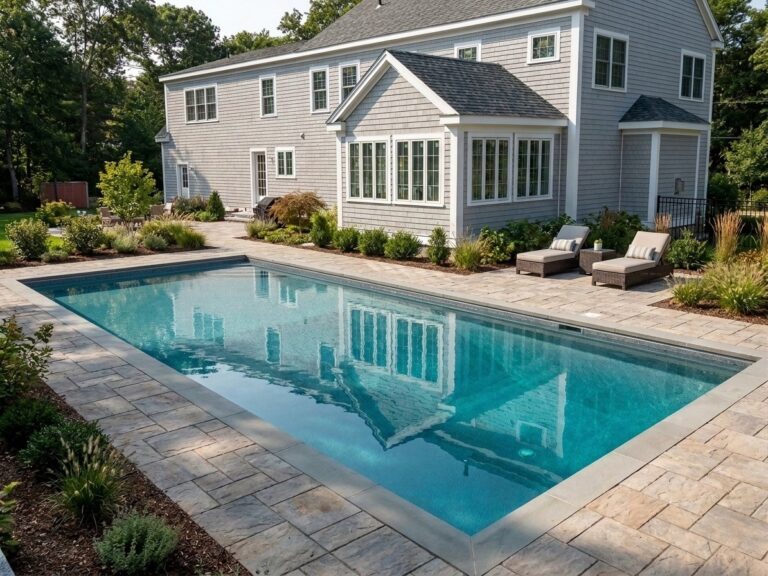
Fall on Cape Cod is one of the most beautiful times of year. The foliage turns gold and rust, the air cools down, and the summer crowds finally thin out. But if you own a pool, autumn also marks the start of a critical maintenance window. As temperatures drop and leaves begin to fall, staying on top of pool care in September and October can make all the difference between a smooth spring opening and a costly headache.
Skim Daily During Peak Leaf Season
One of the biggest fall pool challenges on Cape Cod is the sheer volume of leaves and organic debris that end up in the water. Oak, maple, and beech trees drop enormous quantities of leaves, and it doesn’t take long for them to accumulate on the pool surface and sink to the bottom.
Leaves that sit in pool water start to break down, releasing tannins and organic compounds that stain the pool floor, cloud the water, and feed algae growth. During peak leaf season — typically mid-October through early November — you may need to skim your pool once or twice a day to stay ahead of it. A high-quality leaf net and a functioning automatic pool cleaner can help significantly.
Adjust Your Chemistry for Cooler Temperatures
As water temperatures fall below 70°F, the chemical demands of your pool change. Algae growth slows down, which is good news, but the dynamics of chlorine, pH, and alkalinity still require attention. Cooler water can cause pH to drift, and if left unchecked, imbalanced chemistry going into winter can leave stains or scale on your pool surfaces.
Test your water at least once a week throughout September and October. Keep pH between 7.2 and 7.6, total alkalinity between 80 and 120 ppm, and calcium hardness in the 200–400 ppm range. Shock the pool one final time before closing to eliminate any lingering organic contamination.
Inspect Equipment Before Cold Weather Sets In
Fall is also the ideal time to inspect your pool equipment before temperatures drop below freezing. Check your pump, filter, and heater for any signs of wear, leaks, or unusual noise. If you notice anything off, it’s far easier — and cheaper — to get it repaired now than after a winter of disuse.
Clean out your pump basket and filter thoroughly. If you have a sand filter, consider a backwash and rinse cycle. A cartridge filter should be removed, cleaned with a filter cleaner, and inspected for tears. Taking care of your equipment in the fall ensures it will be ready to run smoothly when you open the pool next spring.
Plan Your Closing Date Strategically
Many Cape Cod pool owners close too early in the fall, which can actually lead to more algae and more work at opening. If you close your pool while the water is still warm — say, above 65°F — you risk an algae bloom underneath the cover over the winter. Waiting until nighttime temperatures are consistently in the 50s is generally the right call.
That said, you don’t want to wait so long that you risk a hard freeze before winterizing is complete. Work with your pool service company to schedule a closing date that makes sense for your specific pool type and the forecast. A well-timed fall closing sets you up for a much easier spring.